Holiday planning
A shared holiday table plan when everyone brings something
A simple way to coordinate dishes, serving space and small personal touches while leaving guests room to choose what they can manage.
In this guide
The useful starting point
Agree on the meal, the budget comfort level and the serving space first. Give every dish an owner and a practical arrival note, then choose one small decorative detail. Use AI to organize the plan, while people confirm food needs and commitments.
“Bring anything” sounds generous until three people arrive with dessert and nobody knows where to put the serving dishes. A shared table can stay relaxed with a little structure. The goal is to make participation easy, including for the guest who has little time or a tight budget.
Choose the shape of the gathering
Decide whether you are sharing a full meal, a light lunch or an afternoon of snacks. Tell guests roughly when you plan to eat, how many people you expect and what you will provide. Ask privately about food needs and practical access needs rather than making assumptions.
Give people options. Someone may prefer to bring bread, help set the table or simply come. A contribution should be an invitation, not an unexpected expense. Set your own spending limit before choosing decorations, extra dishes or favors.
Use one small coordination sheet
Make five columns: contribution; person; arrival time; serving dish or utensil; question to confirm. Add a separate line for the host's available oven, refrigerator and table space. You are organizing the handoff, not promising that a menu is suitable for every dietary need.
For example, a fictional family agrees that one guest will bring a salad with its dressing separately and another will bring a loaf with a bread knife. The host checks the actual ingredients and serving arrangements with the people involved. The plan prevents a missing utensil without turning dinner into a project-management meeting.
Let AI tidy the plan without making commitments
Organize these non-sensitive notes into a contribution table. Preserve every person's confirmed choice. Put unclear details under Questions for the host. Do not assign extra dishes, assume dietary suitability, create a shopping list of new purchases or send anyone a message. Suggest one simpler version if we have too much planned.
Use initials or roles if you do not want names in your chosen tool. Review the table yourself, then share it in the way your group already uses. The assistant cannot know what is in a guest's dish or whether someone has agreed to arrive early.
Make one lovely detail from what you have
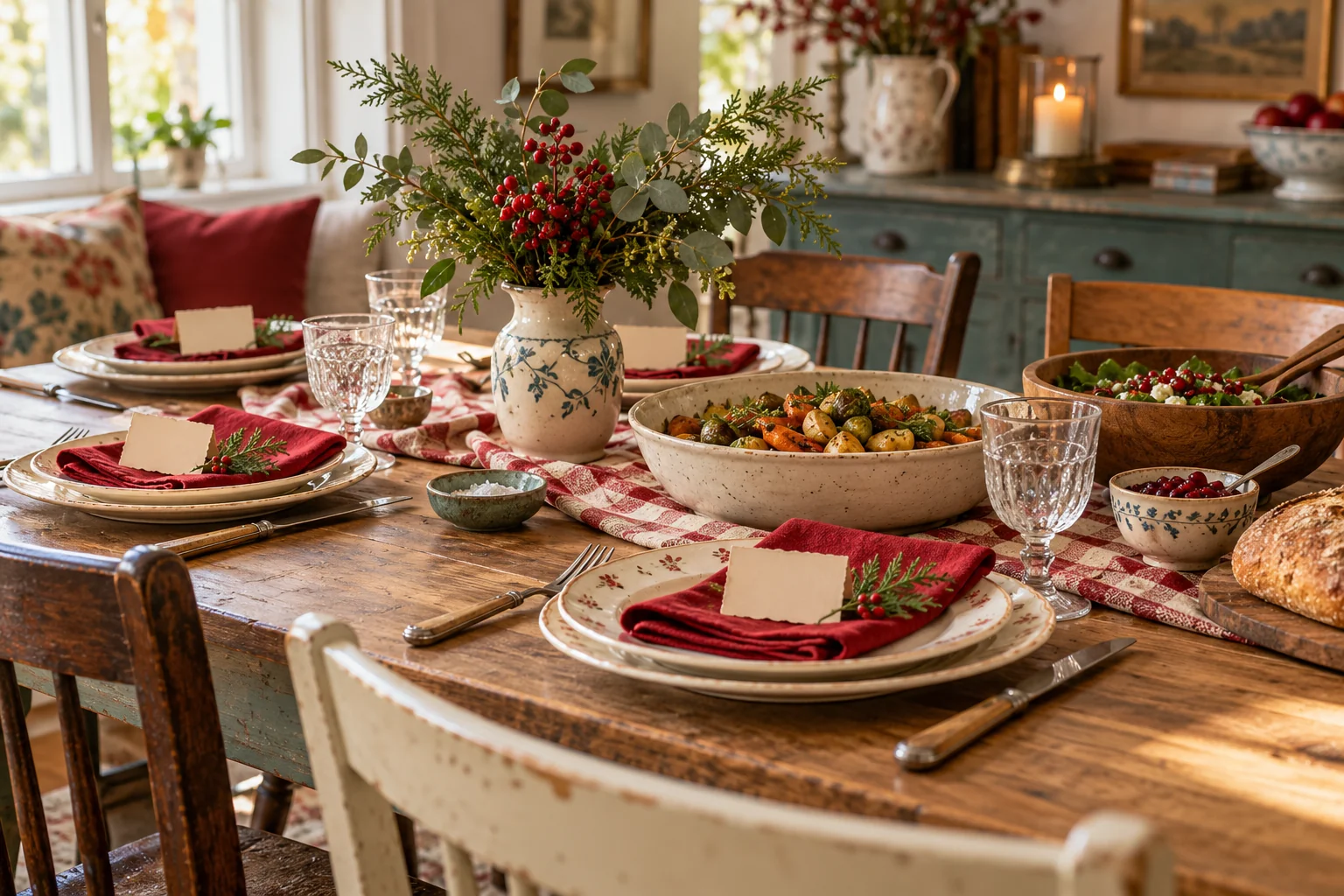
Try handwritten place cards, folded napkins or a few branches in a stable vase away from food and movement. Keep the middle of the table clear enough for conversation and passing dishes. One repeated color can make mismatched plates feel intentional.
Look through your supplies before buying anything. If you want a creative afternoon, the paper-flower guide offers an optional project. Skip it if making the meal already fills your available time.
Plan the last ten minutes
Choose a place for arriving dishes, clear a small landing area and set out the utensils you own. Confirm unresolved food questions with the people preparing the dishes. Use reliable food-safety guidance for preparation, transport and serving; this coordination plan does not replace it.
Afterward, keep one note about what made the gathering easier. Maybe a smaller menu gave everyone more time to talk. That is useful information for next time, even if the table never looked like a magazine photograph.
Find a ready starting point in the free printables and explore the holiday ideas. The point is a gathering you can enjoy, with a plan that fits the people coming.
Put one idea to work
Choose one small change that makes the week calmer or creates room for something you enjoy.
Make a little room to plan →Explore more from Secretly DomesticJoin the Secretly Domestic email list →Keep practicing
 Creative work / Steal my stack
A little creativity, made useful: my printable-product map
Go behind the scenes of Secretly Domestic, one of my seven online brands, and map how a creative idea can become a useful printable for another family.
October 23, 2026 · 5 min read Family Learning
Use AI to Support Your Child’s Learning Without Doing the Thinking for Them
An adult-led approach to AI learning support: better questions, small activities, privacy-conscious prompts and checks that show understanding.
October 22, 2026 · 6 min read